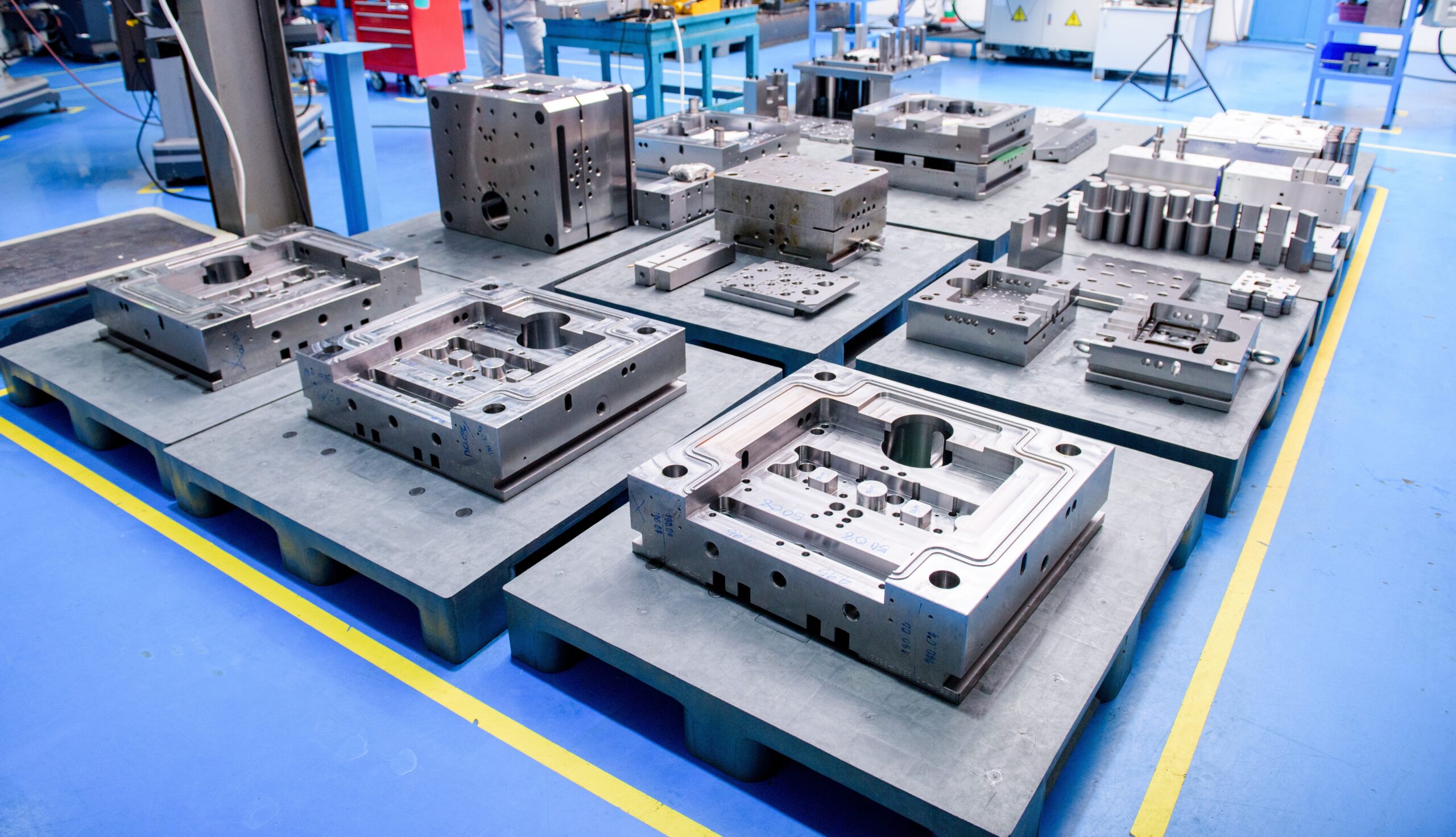
A major component of die casting mold designs is the material that makes up the tooling. Die cast molds play a crucial role in the success of the actual manufacturing process, and maintaining the quality of casted products for a long time to come.
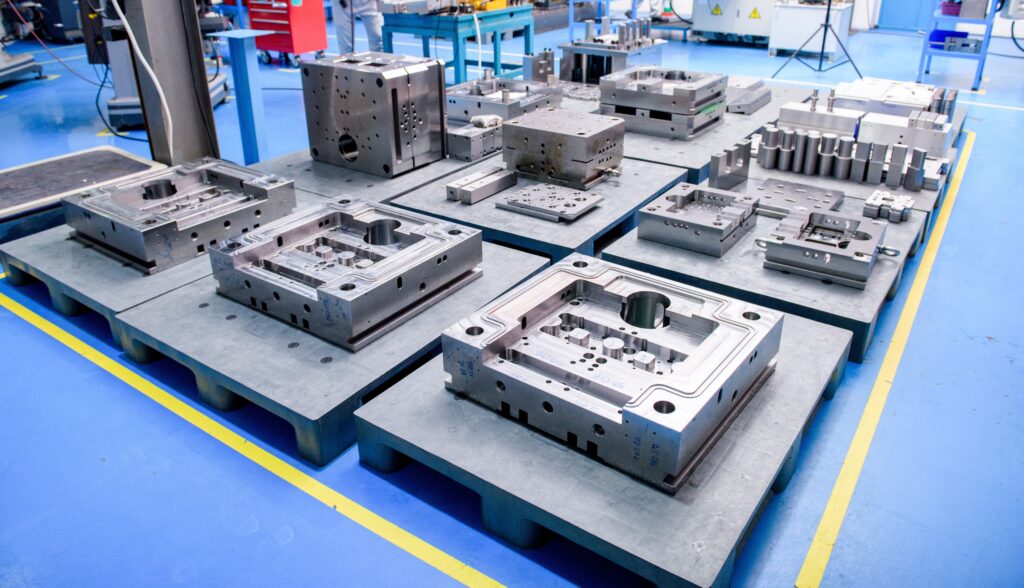
In order to create the best mold tooling possible, that can undergo repeated cycles of high temperature and pressure conditions, most die casting mold designs choose from one of the popular tool steels, adding on additional coatings as necessary.
Comparing Tool Steel Grades for Die Casting Mold Designs
Tool steel comes in several grades, each formulated and treated to handle specific temperature ranges, pressures, and materials. A select few meet the requirements of die casting mold designs: P20 and H13.
P20 Tool Steel
This versatile, low-alloy steel is best known for its excellent dimensional stability, strength, and ductility. The steel is pre-hardened, allowing it to be put into the machine a lot faster than other materials. However, it still doesn’t quite match up with the hardness of other tool steels, and requires additional maintenance and coatings to protect it from corrosion. P20 tool steel is not as long-lasting as H13 tool steel, so is commonly used for short production runs or sampling designs. However, it still offers a cost-effective solution in die casting mold designs, especially when casting zinc.
H13 Tool Steel
H13 is a high-alloy steel with high hardness and wear resistance, as well as excellent thermal conductivity and thermal shock resistance. Its a popular tool steel in aluminum die casting molds due to its resistance to cracking from the repeated heating and cooling cycles that occur during the process. H13 is more difficult to machine, and also lacks any natural corrosion resistance, so getting the desired properties takes longer and makes the steel more expensive to purchase upfront. However H13 tool steel lasts much longer than P20 tool steel and is commonly used to make most die casting molds.
Advanced Coatings that Improve Mold Tool Life
These days, the material selection alone isn’t enough to keep up with the ever-increasing standards of the die casting industry. In order to improve the cycle life of the mold tool and reduce the maintenance necessary, manufacturers can apply a variety of advanced coatings.
Physical Vapor Deposition (PVD) Coatings
PVD coatings are hard and durable and reduce friction, helping to improve the tooling’s abrasion resistance and component ejection. In addition, the resulting film is very thin, with little impact on the dimensions of the mold tooling, allowing manufacturers to maintain precise tolerances.
Chemical Vapor Deposition (CVD) Coatings
CVD coatings are another common type of coating, applying a chemically reactive treatment to the surface of the mold, improving its overall wear resistance and hardness. CVD Coatings are best in die casting mold designs where material abrasion is a concern.
About KenWalt Die Casting
KenWalt Die Casting is a full-service supplier of aluminum and zinc die casting services, offering our expertise in everything from mold designs and prototyping to raw castings, CNC Machining, finishing to component assembly and packaging. If you’re interested in our services, please contact us for more information or request a quote to get started.